
Top 3 Challenges of Setting Up a Bitcoin ATM Company
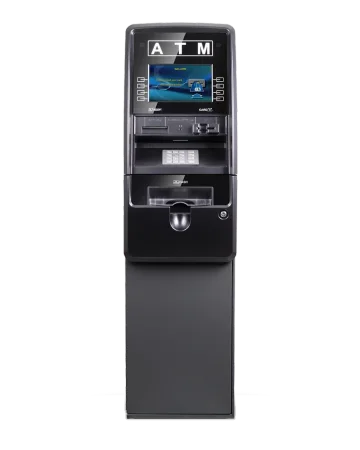
Historical article (2021): kept for reference. Its statistics and its product and legal discussion have not been revalidated and may be out of date, and it is not legal advice. Discontinued company offers have been removed: AtmMachines.com is not currently offering Bitcoin ATMs or Bitcoin ATM programs; to explore providers, visit ATM Atlas. Current official sources include FinCEN’s 2019 guidance on virtual currency business models and FinCEN’s August 2025 notice on cryptocurrency kiosks.
Entrepreneurs and business owners are rapidly entering the Bitcoin ATM (BTM) market. Global installations of cryptocurrency ATMs have increased by more than 70% in 2021, continuing the 120% growth rate demand set in 2020. As a form of investment, people are taking advantage of the lucrative profits available from a well-run Bitcoin ATM company.
While a Bitcoin ATM placement might seem like a straightforward process, several challenges can hamper your kiosk’s profits. Bitcoin legal issues, administration costs, and Bitcoin ATM processing all require effort and preparation, and that resource expense can hurt your total return on investment.
To help make your Bitcoin ATM business opportunity a success and to prepare you for any start-up pitfalls, read on to learn about the three primary challenges associated with your cryptocurrency kiosk.
Talk to ATMMachines.com
Buy an ATM, or ask about a free ATM for your business.
Challenge #1: Time
When tackled on your own, the entire BTM company process can take an average of four to six months. Since a Bitcoin ATM is a Money Service Business (MSB), you must obtain several compliance and business licenses to operate in your state, all of which require extra time. Plus, the legal requirements are complex, and you must source and hire a compliance officer to help prevent any undue risk. The various regulatory hurdles can stretch the start-up time of what looked like a simple ATM placement.
Beyond government requirements, there are also additional tasks involved with your kiosk setup. You will need to:
- Source reliable software to handle your Bitcoin ATM processing
- Register with a cryptocurrency exchange
- Arrange for armored vehicle pickups to transport your fiat cash
- Rent suitable real estate
- And install your cryptocurrency ATM in your rented spot
While each of these start-up procedures is crucial to the overall success of your Bitcoin ATM, it does involve a lengthy time expense and a lot of additional effort.
Challenge #2: Costs
A series of overhead costs are necessary for any new Bitcoin ATM business.
- Kiosk Purchases: You need to buy your physical kiosk itself, and prices can range from $3000 to upwards of $10,000.
- Software Expenses: If your BTM kiosk does not include programming, you also need to pay for the internal software and any additional payment processing fees that facilitate all transactions.
- Liquidity: Since a Bitcoin ATM transfers both Bitcoin and fiat currencies, it is required that you hold a certain amount of liquidity to ensure that every customer exchange request occurs without issue. For fiat transfers, you need a Bitcoin-friendly bank, and for crypto assets, you must purchase a hot wallet. The amount of liquidity you hold in each account depends on your Bitcoin ATMs transaction volume, but it often involves a sizeable amount of capital.
Beyond the overhead costs, you must also prepare for monthly expenses ($200-$300 a month) related to maintenance, repairs, and operational costs, along with setting fees for your armored vehicle transports.
Challenge #3: Security
Like any ATM, security is a critical element in the success of a Bitcoin kiosk, and there are some factors you must address to keep your machine safe.
- Physical Location: You want to place your Bitcoin ATM along paths, malls, or public walkways that gain a lot of foot traffic. While open locations increase your machine’s total transaction volume and profits, it exposes you to potential theft. Most operators need to set up closed-circuit cameras and abundant lighting to deter bad actors.
- Physical Machine Security: Each kiosk should have high-quality locks and reinforced steel to protect cash floats held within the machine.
- Faulty Software: A Cryptocurrency exchange is only accessed online, and your machine uses applications to locate customer identification information. Unprotected software can fall victim to malware or phishing scams, and you might need to foot the bill for that fraudulent activity. Moreover, your applications have to connect with your payment processing partner for each transaction, and faulty software can cause costly errors.
- Admin Security Codes: Many BTMs supply QR codes to represent the exchanged Bitcoins, and each machine uses an Admin password for kiosk management. While a single admin code is helpful, it becomes a critical weak point — if the top-level access is compromised, the entire machine becomes vulnerable. Owners often need support from a security partner to remedy this issue.
Wrap Up
While starting a Bitcoin ATM business can feel overwhelming with compliance requirements, setup costs, and security risks, the rewards are well worth it for those who prepare.